
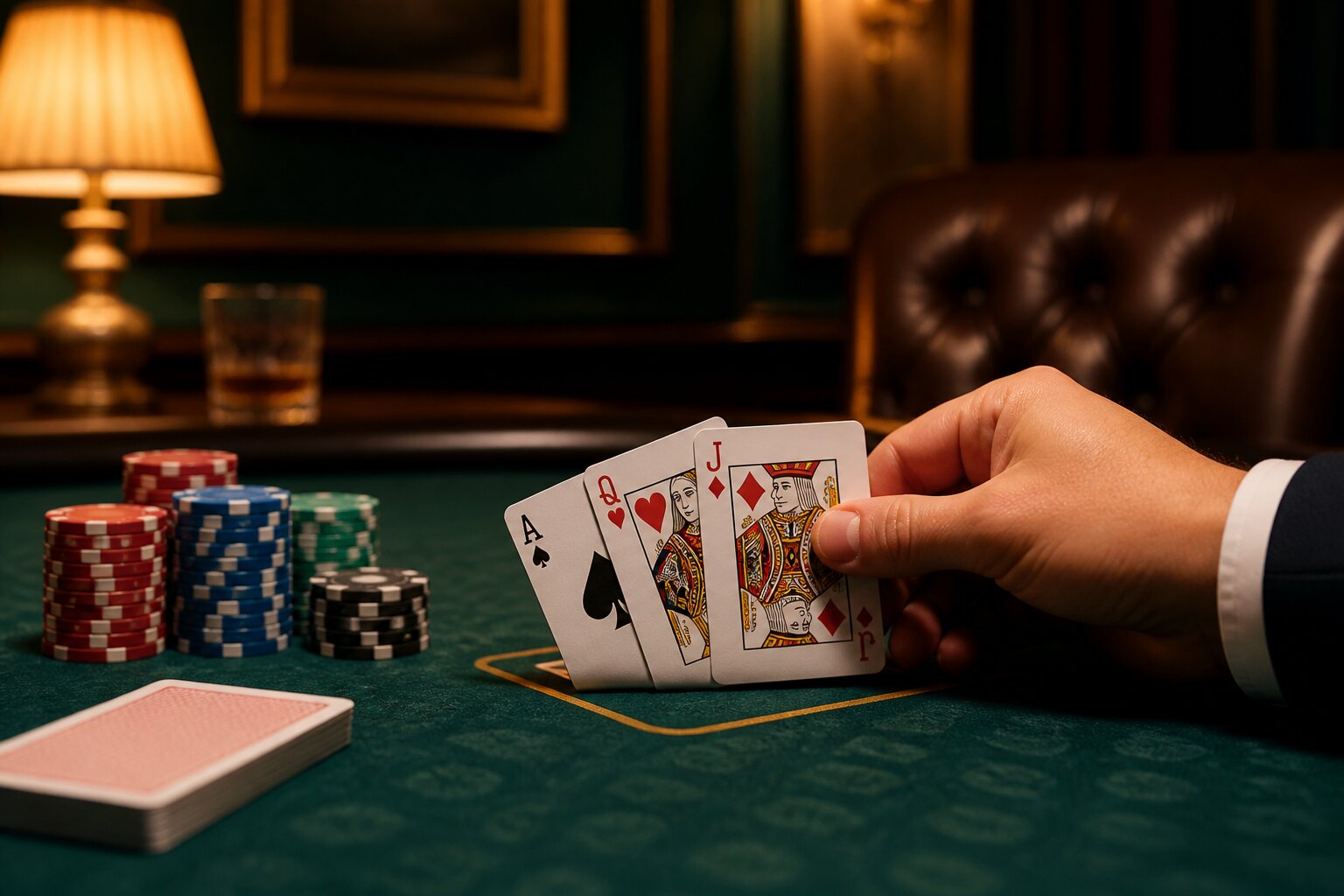
Thinking of trying 3 Card Brag but unsure which hands beat which? This guide lays out every hand in order, with clear examples and enough context that you can read it once and feel ready to take a seat at the table.
Whether you are new to the game or need a quick refresher, the explanations that follow focus on what matters at showdown: how hands compare and why certain combinations outrank others. Read on to see the full hierarchy and practical examples that make the differences easy to spot.
What Is 3 Card Brag? Rules & Basics
3 Card Brag is a simple three-card comparing game played with a standard 52-card deck. Each player receives three cards face down and makes betting decisions based on their hidden hand. After a round of betting, any remaining players reveal their cards and the strongest hand wins the pot according to the game’s specific ranking order.
Players decide whether to remain in a hand or fold after seeing their cards. Betting and bluffing add the strategic layer, but the core of resolving any showdown is the hand ranking that follows. A quick example: three consecutive cards of the same suit form a very strong sequence-based hand, while three cards of the same value form the highest category of hand in this game.
Now that the basic flow is clear, the next section explains how those hands are ordered and why that order differs from other card games.
How Are Hands Ranked in 3 Card Brag?
3 Card Brag uses a hierarchy that places three of a kind at the top, followed by sequence-based hands and suit-based hands, then pairs and finally high card hands. This order is different from many forms of poker, so recognising the distinct categories is essential.
The top categories are:
- Prial (three cards of the same value)
- Running flush (three consecutive cards, all the same suit)
- Run (three consecutive cards, mixed suits)
- Flush (three cards of the same suit, not consecutive)
- Pair (two cards of the same value plus an unpaired card)
- High card (no combinations)
Each category is compared first by its type and then, where necessary, by the values within that type. For example, when two players both have runs, the run with the higher top card is the winner. With that structure in mind, the next section gives detailed examples of each category so you can see how hands sit against one another.
Ranking the Best 3 Card Brag Hands
Below are the main hand categories explained with examples and notes about how ties are broken. These examples should make it straightforward to judge hands at a glance when you are playing.
Prial: The Top Hand Explained
A prial is three cards of the same rank and is the single strongest hand category in 3 Card Brag. Prials are compared by the rank of the cards: three threes beat three aces, which beat three kings, and so on down the ranks. This unusual ordering is traditional in the game.
Examples
Prial of Threes: 3-3-3
Prial of Aces: A-A-A
Prial of Sevens: 7-7-7
A prial will always beat any running flush, run, flush, pair or high card, making it the hand every player hopes to hold when cards are revealed.
Running Flush & Run: Powerful Sequences
A running flush is three consecutive cards of the same suit. It ranks immediately below prials. A run is the same sequence of three cards but with mixed suits. When two running flushes or two runs are compared, the sequence containing the highest-value top card wins.
Examples
4-5-6 of hearts
10-J-Q of spades
Run examples
5 of diamonds, 6 of hearts, 7 of spades
J of clubs, Q of hearts, K of diamonds
Because a running flush combines both sequence and suit, it outranks a plain run. That extra requirement of a single suit is what moves it above the mixed-suit sequence.
You can now see why a running flush is given priority; next we look at hands based solely on suit or matching ranks.
Flush, Pair & High Card Hands
A flush is any three cards of the same suit that are not in sequence. Flushes are compared by their highest card, then the next highest, and so on. If two players both hold flushes of the same three high cards, suits are not usually ranked, so a tie may result depending on house rules.
A pair is two cards of the same rank plus a third unrelated card. Pairs are compared by the rank of the pair first, then by the value of the single card if pairs match.
High card hands contain no matching ranks, no sequence and no three-card suit match. They are judged by the highest card, then the next highest if needed.
Examples
Flushes: 2-5-10 of clubs; 7-J-K of spades
Pairs: 6-6-Q; K-K-3
High cards: K-9-5; Q-7-2
Having these distinctions in mind helps when you must decide whether to compete in a pot or fold. The section that follows explains which hands are weakest and why they sit at the bottom of the list.
What Is the Weakest Hand in 3 Card Brag?
High card hands are the weakest category in the game because they lack any grouping by rank, sequence or suit. When a player holds only singletons, the hand’s value is determined by the highest card present, then the next highest if necessary.
For example, 2 of clubs, 5 of hearts and 9 of diamonds is a high card hand ranked on the 9. Similarly, 4 of spades, 7 of diamonds and 10 of clubs is judged by the 10. High card hands are common and often result in early folds, unless players judge the betting or table dynamics worth contesting.
With the weakest hands clarified, the final section discusses how these rankings compare with poker-style hand orders so you can avoid assuming the same values apply elsewhere.
How Does 3 Card Brag Differ from Poker Hand Rankings?
The main difference is the position of three of a kind relative to sequence-based hands. In many poker variants a straight flush is the top hand; in 3 Card Brag, a prial is the top-ranking combination, and running flushes and runs follow it. That means a hand that would be dominant in poker can be outranked by a prial here.
For example, a running flush (three consecutive suited cards) is a very strong holding but still loses to any prial. Likewise, a run ranks above a flush, which is the reverse of some poker systems for three-card comparisons. These distinctions change the strategic value of certain holdings and influence how players judge risk and reward during betting.
Understanding these differences lets you adapt expectations when switching between games, and it gives a clearer sense of which hands to value highly at the table. Play should always be undertaken within personal limits and in accordance with site rules, and knowing the ranking order makes every decision at showdown a more informed one.
Play Casino Games at Bezy
Explore the casino games available at Bezy and choose what suits you. You can browse and play at your own pace, with no pressure to continue and responsible gambling tools available to help you stay in control.
If you decide to play, setting up an account and making a deposit is straightforward. Bezy offers tools to help you manage your gambling, including setting limits and taking control of your play.
Gambling should be treated as entertainment, not a way to make money. Only gamble what you can afford to lose, and consider taking a break if gambling stops being enjoyable.
**The information provided in this blog is intended for educational purposes and should not be construed as betting advice or a guarantee of success. Always gamble responsibly.