
If you’re a fan of classic blackjack, you might have noticed a popular twist appearing at online casinos — Blackjack Switch. At first glance it looks similar to the game you already know, but a single rule change creates a very different strategic environment.
This article explains the key differences in rules, payouts and house edge so you can judge which game suits your style. Whether you’re experienced at the tables or just curious, the comparison below will give you a clear picture of how the two games play out.
What Is the Difference Between Blackjack Switch and Traditional Blackjack?
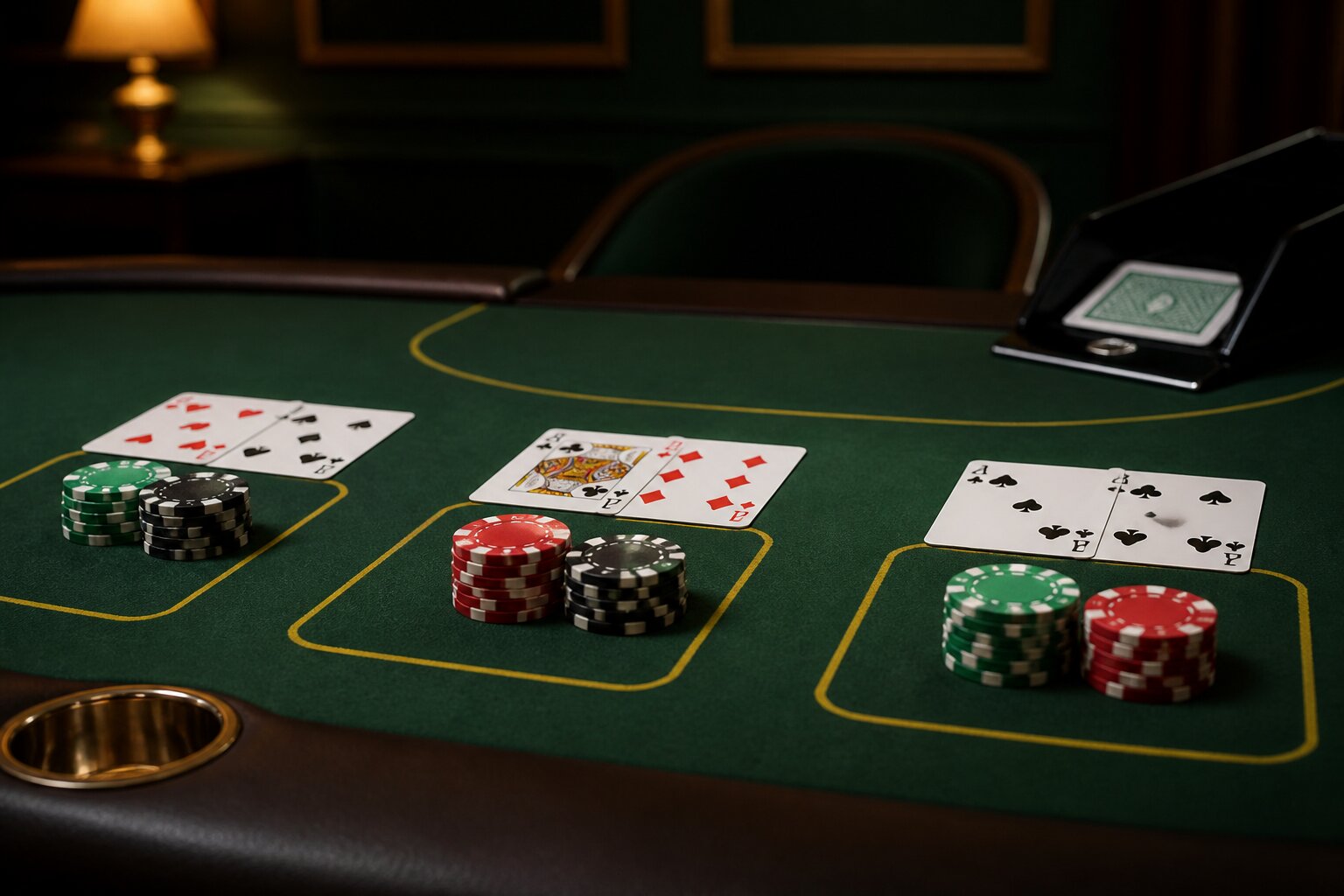
The defining feature of Blackjack Switch is that you play two hands at once and can move cards between them. In a typical round you place equal bets on two hands, receive two cards for each, and then have the option to swap the second card from one hand with the second card of the other. That single choice alters how you build hands and the decisions you make afterwards.
There are a few consequential rule changes that balance this extra choice. One is how the dealer’s 22 is treated: when the dealer reaches a total of 22, remaining player hands push rather than win, except where a player has a natural blackjack. Another is the blackjack payout, which in Blackjack Switch pays even money (1:1) rather than the higher 3:2 payout commonly found in traditional blackjack.
In short, Blackjack Switch grants an extra tactical move at the start of each round, while adjusting the rules and payouts to maintain the game's overall balance. That makes it a distinct variant rather than just a novelty.
How Do the Rules of Blackjack Switch Compare to Standard Blackjack?
Both games share the same basic objective: build hands that beat the dealer without exceeding 21. Beyond that, the two differ in how hands are started and some dealer outcomes.
In standard blackjack you play a single hand dealt two cards and may hit, stand, double down or split pairs according to table rules. Decisions are made against the dealer’s single hand, and a dealer blackjack usually ends the round immediately in the dealer’s favour.
Blackjack Switch begins with two hands and equal bets. After the initial deal you can choose to swap the second cards between those hands. After any switch, play proceeds similarly to standard blackjack: you may hit, stand, double or split where the rules allow. The dealer, however, follows the variant’s special rules for totals such as 22, which affect the result of active player hands.
These differences change the early-round calculus and alter expected values for particular plays, so players often adjust their approach compared with single-hand blackjack.
Payouts in Blackjack Switch vs Blackjack: What Should You Expect?
Payouts are an important practical difference and influence the overall expected return. In traditional blackjack, a natural blackjack (an Ace plus a 10-value card dealt as the first two cards) typically pays 3:2. Regular winning hands are paid at 1:1.
In Blackjack Switch, natural blackjacks pay even money (1:1). Regular wins also pay 1:1, while the dealer 22 rule causes many hands to be returned to the player as pushes rather than wins or losses. The result is that the switching option is compensated for by lower payouts and specific push conditions.
Across either game, individual casinos may offer slight rule variations that affect payouts, such as different dealer behaviour on soft 17 or the number of decks used. It’s wise to check the table rules before you play so you know the exact payoffs for the variant you’ve chosen.
Which Game Offers Better Odds for Players?
When comparing player odds, the term to look at is the house edge — the long-term expected advantage the casino holds. Under common rule sets, classic blackjack played with good strategy typically yields a house edge around 0.5%. That number shifts depending on deck count and dealer behaviour.
Blackjack Switch usually carries a marginally higher house edge, commonly in the 0.6% to 0.8% range under standard implementations. The additional choice to switch cards is offset by rule changes such as the push-on-22 and the 1:1 blackjack payout, which together raise the house’s statistical advantage.
Exact figures depend on rule permutations at a particular table, so comparing published house-edge estimates or calculators for the specific variant you intend to play will give the most reliable comparison.
Understanding the Blackjack Switch Feature: How Does It Work?
The “switch” is the mechanic that distinguishes this variant. After receiving two hands of two cards each, the player may swap the second cards between those hands. The aim is to convert mediocre hands into stronger combinations — for example turning two weak totals into one solid hand and one playable hand, or creating a possible blackjack on one hand.
After making any switch, play continues in the usual way for each hand. Decisions made after the switch depend on the reshaped totals and the dealer’s visible card. Because the switch affects both hands simultaneously, it introduces a layer of combined strategy: one choice influences two outcomes.
Rules that counterbalance this advantage include even-money blackjacks and the push outcome when the dealer totals 22. These adjustments mean the switch is a powerful tool, but not a guaranteed path to superior results.
Are House Edges Different in Blackjack Switch and Classic Blackjack?
A house edge derives from the interaction of rules, payouts and player options. Classic blackjack’s lower house edge comes from favourable blackjack payouts and widely studied strategic charts. Blackjack Switch’s edge is typically higher because its compensating rules blunt the value of the switching option.
Small rule differences have measurable effects: the payout for a natural, whether the dealer hits a soft 17, deck count, and the treatment of dealer 22 all push the house edge up or down. For players looking to compare variants, the most useful approach is to examine the published house-edge figure for the exact rule set you’ll encounter and consider how much the switching option appeals within that context.
Is Blackjack Switch Available in UK Casinos?
Blackjack Switch is commonly available online and at some land-based casinos in the UK. Availability varies by operator, so you will find a wider selection of variants and stake levels on larger online sites than at most bricks-and-mortar venues.
When choosing where to play, prefer venues that are properly regulated and display clear game rules and paytables. A UK Gambling Commission licence, visible terms and conditions, and published return-to-player information all help you confirm a site is operating legally and transparently.
Online platforms often list rule details alongside each table, which helps you see how a given Blackjack Switch game differs from the standard. Before you sit down, check the table rules so you understand elements such as dealer behaviour, how switches are handled, and any special payouts.
Also look for sites that support responsible gambling tools, explain staking limits, and provide fair-play guarantees. Practical things to check include:
- confirmation of a UK Gambling Commission licence or equivalent regulator,
- clearly displayed game rules and paytables,
- published RTP or fairness information, and
- available responsible gambling controls and customer support.
Checking these details before playing lets you select the version whose rules and payouts you prefer, and helps you play with greater confidence and awareness.
Common Myths About Blackjack Switch and Classic Blackjack
There are a few recurring misconceptions that can cloud a newcomer’s view. Clearing these up helps you form realistic expectations.
Myth 1: Switching Always Guarantees a Win
Switching gives more choices but does not ensure success. The variant compensates with different payouts and dealer rules so the overall balance between player and house remains intact.
Myth 2: Basic Strategy Guarantees Profits
A well-applied basic strategy reduces the house edge but does not deliver guaranteed profits. It improves expected results over time but individual sessions can swing either way.
Myth 3: Casinos Rig the Games
Licensed operators use certified systems and regulated procedures to ensure fairness. Online titles use independently tested randomisation and land-based games use standardised shuffling and dealing practices.
Myth 4: You Can Spot “Hot” or “Cold” Tables
Each round is independent; previous outcomes do not influence future ones. Betting patterns and outcomes follow probabilistic models, not streaks that can be reliably tracked for prediction.
If you decide to try either game, take a moment to read the specific table rules and paytables so you know exactly how that version behaves. That knowledge, combined with sensible staking, makes for the most informed and enjoyable experience.
**The information provided in this blog is intended for educational purposes and should not be construed as betting advice or a guarantee of success. Always gamble responsibly.