
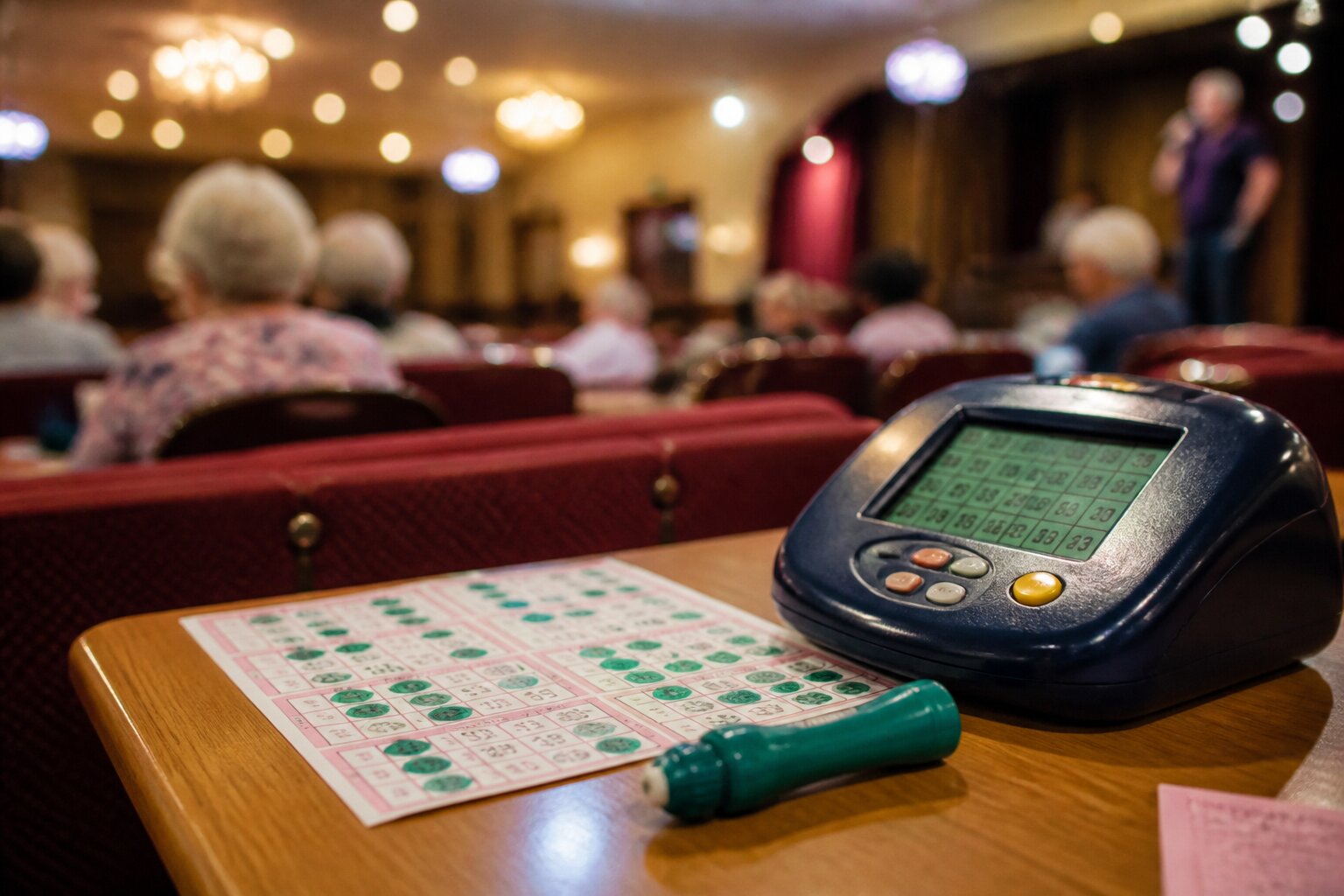
Ever wondered if it’s possible to win bingo in just 15 numbers? It sounds almost unbelievable, but tales of lightning-fast full houses circulate often enough to make people curious.
This post looks at whether a 15-call full house can actually happen, how likely it is, and some documented examples. Read on to understand the mathematics behind it and what those rare moments mean for players.
How Does Bingo Work in the UK?
Bingo in the UK is straightforward and social, with all players required to be 18 or over. The most common form is 90-ball bingo. A standard ticket shows 15 numbers arranged across three rows, with five numbers per row and gaps between them.
Numbers from 1 to 90 are drawn at random by a caller or a computer. Players mark the numbers on their tickets as they are announced. Typical objectives in a session include completing a single row, two rows, or a full house, which means marking all 15 numbers on one ticket.
Games follow strict procedures to ensure fairness, and operators must meet regulatory standards. Play is based on randomness, not on any skill that a player can apply to change outcomes.
What Are the Odds of Winning Bingo in 15 Numbers?
A full house in 15 calls requires that every number called matches the 15 numbers on a single ticket in the first 15 draws. Mathematically, a standard 90-ball ticket has 3,268,760 possible full house combinations. For one ticket, the chance of a full house exactly at 15 calls is approximately 1 in 1,727,816.
Those figures are the result of combinatorial maths rather than player behaviour; they remain the same regardless of how many people are playing or how frequently a player attends sessions. Because the numbers are drawn randomly, there is no player action that alters these probabilities.
Spotting how unlikely this outcome is helps set realistic expectations about what to expect from ordinary play.
Is It Possible to Get a Full House in 15 Calls?
Yes, it is possible. The rules of bingo allow for any sequence of draws, including one that completes a ticket in the first 15 calls. This outcome is exceedingly rare because there are so many potential combinations of numbers and tickets in play.
Even though it can happen, most games reach full houses after many more calls. The rarity of a 15-call full house is what makes any verified instance noteworthy within the bingo community, and such results often attract attention when they are confirmed.
Verification and transparency are important when a very early full house is claimed. Organisers will typically check draw records and ticket validation to ensure there has been no error or irregularity. This reassures players and maintains confidence in the fairness of the game.
Knowing that a 15-call full house is possible but highly unlikely can help players set realistic expectations. Focusing on the social and entertainment aspects of the game, rather than expecting exceptional outcomes, tends to make the experience more enjoyable.
Real-Life Examples of Quick Bingo Wins
Instances of 15-call full houses do exist, but they are rare and tend to attract attention when they occur. Because organisers often record notable outcomes, a few verified examples have entered bingo folklore.
One recorded case from 1997 occurred during a nationally organised session, and another was reported at a club in North Yorkshire in 2010. These events are highlighted because they defy the usual pattern of results, not because they indicate a reliable pathway to similar wins.
Such reports show that statistical outliers can and do happen, yet they remain exceptional rather than representative of normal play. They are interesting anecdotes that illustrate how probability can produce surprising results on occasion, but they do not change the overall odds faced by players.
Organisers and players alike typically treat these occurrences as curiosities. Records of unusual outcomes are kept more for historical interest than as evidence of any repeatable strategy. Players should therefore enjoy such stories while recognising they are exceptional and not to be expected in ordinary sessions.
How Rare Are 15-Number Bingo Wins?
To illustrate the rarity: with odds around 1 in 1.7 million per ticket for a 15-call full house, most players will never see it even after many years of regular attendance. In a typical session, many full houses will be paid out, but these generally require a far greater number of calls.
These quick wins are memorable precisely because they are so uncommon. They’re interesting to read about and exciting to witness, but they should not shape how players plan their sessions.
If you keep this perspective, you can appreciate unusual wins as special moments without letting them skew your view of the game.
Myths About Rapid Bingo Wins: Can They Really Happen?
A number of myths surround rapid full houses. Some players claim that certain seats, specific cards, or particular times of day increase the chance of an early win. In reality, none of these factors change the statistical structure of the game.
Because draws are random, trends that appear to some players are coincidences rather than causal patterns. Random variation can produce short runs that look meaningful, but these are examples of chance rather than repeatable advantages. Mathematical probability and the known distribution of numbers explain expected outcomes over time.
Beliefs about hidden methods for improving outcomes do not stand up to the mathematics behind number selection. No strategy can alter the odds of a single draw, and any perceived edge is usually the result of selective memory and confirmation bias.
Accepting the role of randomness in the draws helps deflate superstitions and keeps the game enjoyable for everyone. It also promotes responsible play by setting realistic expectations about what is possible and what is not.
How Does Game Format Affect the Odds?
Different bingo formats change the mechanics and the calculations. In the UK, 90-ball bingo requires marking 15 numbers for a full house, while 75-ball bingo, played elsewhere, uses a 5x5 grid with a free central space and different patterns.
Fewer numbers on tickets or fewer total numbers in play can alter probabilities, but an early full completion remains statistically unlikely in any standard format. The exact odds need to be calculated for each game type, taking into account ticket design and the total pool of numbers.
Choose a format because you like its pace and patterns, not because you expect better chances of an exceptionally fast win.
Summary: What Can We Learn About 15-Number Bingo Wins?
A 15-call full house can and does occur, but only as an extreme statistical outlier. For a single ticket, the odds are on the order of 1 in 1.7 million, so most players will never encounter such a result.
Key takeaways:
- 15-number full house wins happen, but very rarely.
- No method or superstition changes the mathematical odds.
- Different game formats alter calculations, but none make rapid full houses common.
We encourage sensible play and setting personal limits so the game stays enjoyable. Treat rare wins as remarkable stories rather than standards to aim for, and play bingo for the social and entertainment value that bingo offers.
**The information provided in this blog is intended for educational purposes and should not be construed as betting advice or a guarantee of success. Always gamble responsibly.