
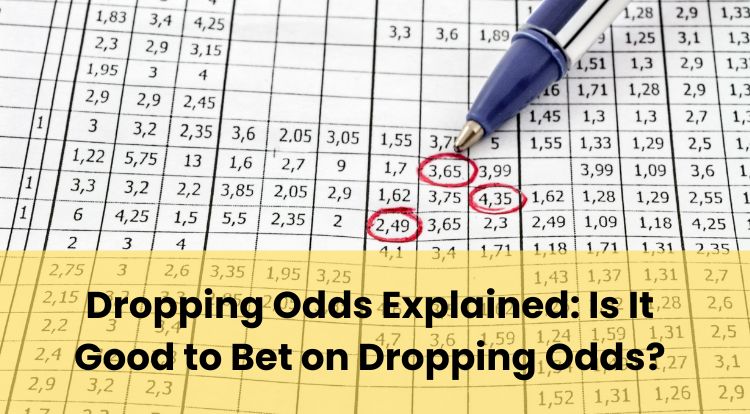
Anyone browsing betting markets will notice that prices move, sometimes in minutes. One phrase you will often hear is "dropping odds", yet what that means for your decisions is not always obvious.
This blog post explains what dropping odds are, why prices fall, and how bookmakers react. It also looks at whether falling prices can signal value, the risks to watch for, and how to read the size and speed of a move.
You will find clear guidance, examples, and a simple pre-bet checklist. Keep in mind that betting should always be affordable and optional, and only stake money you can comfortably lose.
What Do Dropping Odds Mean In Sports Betting?
Dropping odds describe a price that has been reduced compared with the opening or earlier quote. If a football team moves from 3/1 (4.00) to 2/1 (3.00), the potential return has decreased because that outcome is now rated as more likely by the market or the bookmaker.
A fall in price can be triggered by new information, a surge of bets, or a shift in models and opinions. It reflects a change in assessment, not a promise of any result.
For anyone choosing to act on price moves, keep it simple and measured. Only ever bet amounts you are prepared to lose.
Why Do Odds Drop?
There are several common drivers:
- Weight of money: If a large volume of bets lands on one side, traders may shorten that selection to control liabilities and encourage money on the other side.
- New information: Team news, injuries, tactical changes, or weather updates can all alter the estimated chance of an outcome. A striker ruled out an hour before kick-off often prompts an immediate move.
- Sharp action: Bookmakers monitor respected accounts and exchange activity. When knowledgeable bettors take a position, prices often adjust quickly.
- Market alignment: If one major operator moves, others may follow to stay competitive and avoid being picked off by price-sensitive bettors.
Understanding why a price is moving helps you judge whether it is meaningful or just noise. With that in mind, it is useful to see how bookmakers manage these shifts.
How Bookmakers Adjust Odds
Bookmakers set opening prices using models, data, and expert input, then add a margin. From there, traders monitor bets, news feeds, and exchanges to manage risk and keep prices in line with the market.
Adjustments are routine. They balance the book across outcomes, reflect fresh information, and keep quotes competitive without exposing the business to outsized losses.
Common Causes Of Odds Movement
Several practical triggers sit behind day-to-day moves:
Prices often respond to liability thresholds. If exposure on one outcome grows too large, traders shorten that price to slow new bets and stimulate interest in alternatives.
Model updates and information feeds can prompt immediate tweaks. A confirmed line-up or a weather downgrade might nudge totals or handicaps without any big bets landing.
Wider market signals matter too. Exchange prices, price-aggregator screens, and moves at influential firms can ripple across the board. When a change appears across many bookmakers at once, it usually points to a market-wide reassessment rather than a single firm’s view.
Are Dropping Odds A Reliable Signal Of Value?
Not on their own. A falling price might reflect useful information, but it can also be driven by popularity, book balancing, or cautious trading. A move towards a lower return does not automatically mean the remaining price is still attractive.
Some bettors track how the price they took compares with the closing price near kick-off. Beating that final number is often viewed as a sign of having judged the market well, although it does not ensure profit on any specific bet.
Treat a drop as one clue among many. A clear reason for the move, supported by your own assessment of the event, matters far more than the change itself.
So when, if ever, does it make sense to get involved with a falling price?
When Should You Back Dropping Odds?
Backing a selection after a drop can make sense if the move aligns with evidence you trust. For example, if your research already rated a team higher than the market and an injury update supports that view, a shortened price may still meet your target.
Context helps. Compare prices across several bookmakers to see whether the shift is isolated or market-wide. A single outlier might be correcting an error, while a broad move suggests a shared information update.
Most importantly, be comfortable with the current price, not the one that has just vanished. If the new quote no longer represents value by your standards, let it go and wait for the next opportunity. Keep stakes within limits that suit your budget.
Risks Of Backing Dropping Odds
A lower price means a lower potential return. If the move has already absorbed the key information, the remaining edge may be gone.
Following every fall can become herd behaviour. Moves can be caused by short-term surges in bets, publicity, or simple copycat pricing, none of which guarantee that the underlying estimate is sound.
It is easy to anchor on the price you missed. Chasing a market down just to be involved can lead to poorer decisions. Understanding how and how fast a price moved can help separate signal from noise.
How To Interpret The Size And Speed Of Odds Movement
Both magnitude and timing offer clues. A sharp drop across multiple bookmakers in a short window often signals significant news or respected money. For instance, a swing from 4.00 to 3.20 minutes after confirmed team news is usually information-driven.
Gradual moves over several hours tend to point to steady interest, minor updates, or traders gently managing liabilities. These shifts can still be meaningful, but they are less likely to be tied to a single decisive factor.
Comparing markets is useful. If only one bookmaker shortens while the rest sit still, it may be a local adjustment rather than a genuine change in the broader estimate.
Treat size and speed as context, not a verdict. They help frame a decision, but they do not replace your own analysis.
Quick Checklist Before Backing Dropping Odds
If you are considering a bet after a price falls, a short pause to check a few points can keep decisions clear-headed:
- Check the Reason for the Drop: Identify what likely triggered the move. Was there verified news, or just a wave of bets?
- Compare Across Bookmakers: Scan a few firms. A market-wide shift carries more weight than a single-book correction.
- Do Personal Research: Make sure your read of the match-up supports the position. Price moves are a clue, not a conclusion.
- Assess Value: Judge the current odds on their own merits. Would you take this price if you had not seen where it opened?
- Set Spending Limits: Keep stakes affordable and proportionate to your bankroll and confidence.
- Take Your Time: If information is unclear, let the market settle. Missing one opportunity is better than forcing a bet.
Common Misconceptions About Dropping Odds
Dropping odds do not mean an outcome is guaranteed or even highly likely. Prices reflect changing estimates and liabilities, not certainty.
They are not a shortcut to value. A move can follow large bets or publicity without any meaningful change in the underlying event. Equally, not every fall comes from insider knowledge. Public sentiment, media narratives, and trader risk controls can all play a part.
It is also untrue that a dropping price is always better than the original. Sometimes the best opportunity was earlier, and once the market has adjusted, the edge has gone.
If you choose to bet, keep it affordable and occasional. Help is available if gambling starts to affect your well-being or finances. Independent organisations such as GamCare and GambleAware provide free, confidential support.
Used with care, price movements are simply one more piece of information to weigh before you decide whether to get involved.
**The information provided in this blog is intended for educational purposes and should not be construed as betting advice or a guarantee of success. Always gamble responsibly.