
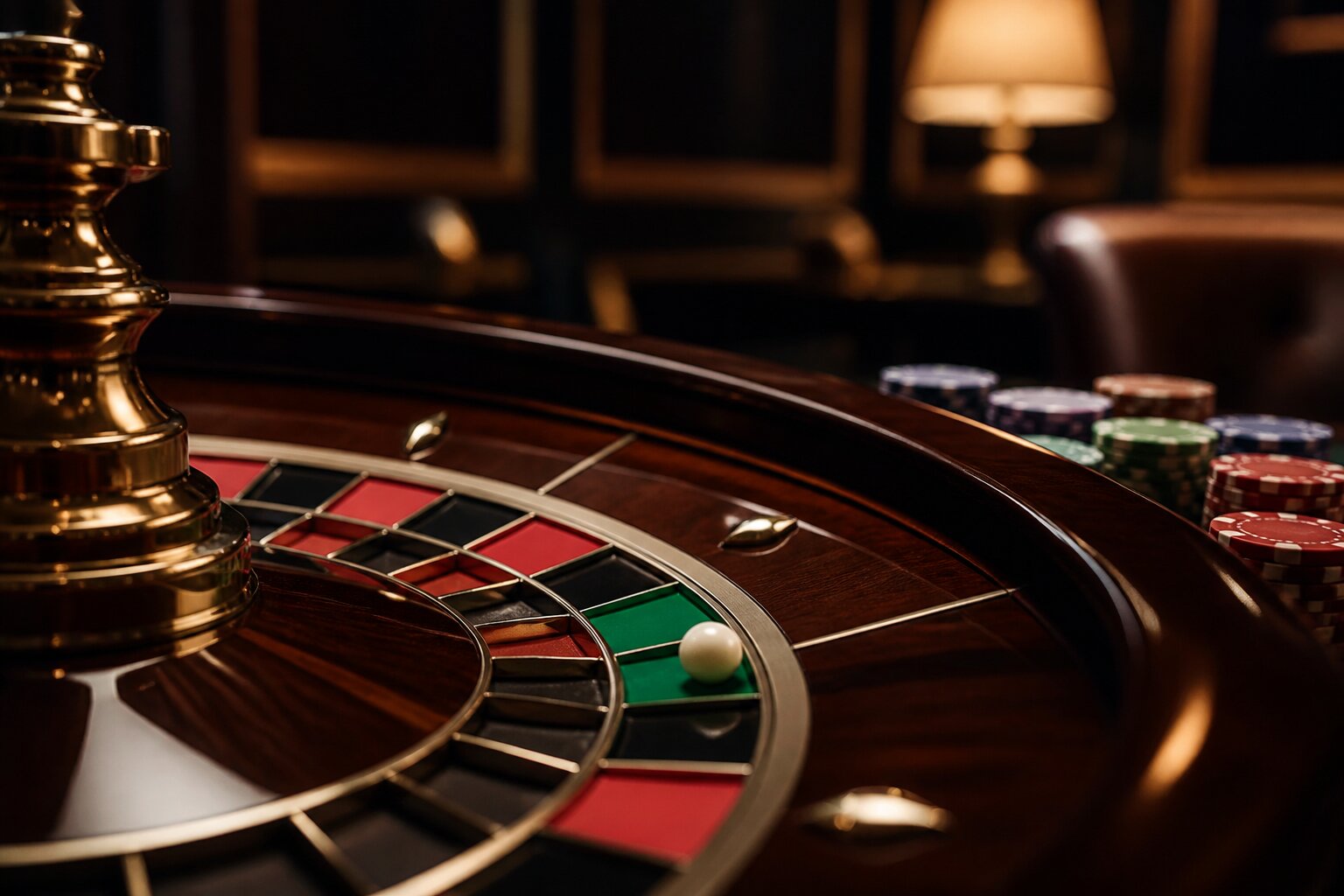
If you’re curious about roulette and how the green zero fits into the game, you’re not alone. Many players wonder exactly how zero works on the wheel and how it affects bets.
Zero can look like an oddity that quietly alters chances and outcomes in ways that are easy to miss. Read on to clear up the common questions about whether zero counts as even or odd, how it affects payouts and odds, and why it matters to your play.
What Does ‘Even’ Mean in Roulette?
In roulette, the word even refers both to numbers divisible by two and to a specific bet on the table. The numbers 1 to 36 are split into two groups for this bet: evens and odds. An even number is one you can divide by two with no remainder, such as 2, 4, 6 and so on up to 36.
There is a marked “Even” area on the betting layout. When you place chips there, you win if the ball lands on any of the even numbers between 1 and 36. This bet does not include zero, which is treated separately on the layout.
Understanding that even bets cover only 1 to 36 helps when we look at how zero changes the chances on the wheel.
How Is Zero Treated in Roulette Games?
Zero occupies its own pocket on the wheel and its own space on the table. It is not part of the even, odd, red or black groups, so those outside bets do not include zero.
European-style wheels have a single zero in green. American-style wheels add both a zero and a double zero, each in green. When the ball lands in a zero pocket, outside bets lose, and chips placed on zero as a straight-up number receive the straight-up payout.
Some tables use rules that soften the impact of zero on certain bets. For example, La Partage and En Prison apply in some games and can reduce losses on even-money bets when zero appears. These rules vary by table and are worth checking before you play.
Why Is Zero Important in Roulette?
Zero is the feature that sets roulette apart from many other number games. By standing outside the usual betting groups, zero ensures not every bet covers every possible outcome. That alone changes the strategic picture for the player.
Because it is excluded from even, odd, red and black, zero slightly reduces the chance these bets win compared with a wheel that had only 1 to 36. In practical terms, that small difference is what defines the casino’s long-term advantage while keeping gameplay straightforward and predictable from spin to spin.
Zero also adds a clear focal point for some bets. Players can back zero directly, and different bets that touch zero on the layout have their own payout patterns.
Is 0 Considered Even or Odd on the Roulette Table?
Zero is neither even nor odd on the roulette table. It sits apart from both categories as well as from red and black, so it cannot be grouped with those outcomes. In practice this means it occupies a special position on the wheel and on the betting layout.
If the ball lands on zero, any bet placed on even or odd loses. That applies to all straight even-money outside bets, so players should be aware of this distinction before placing those wagers. Knowing what zero represents helps when considering risk and the likely outcome of an outside bet.
How Do Roulette Payouts Handle Zero?
Zero has a specific treatment in payouts. A straight-up bet on zero pays 35 to 1 if it hits, matching the payout for any single number between 1 and 36. That high payout reflects the low probability of that single-number outcome.
Outside bets do not win when zero appears. Examples of such outside bets include:
- even
- odd
- red
- black
When zero comes up, those outside stakes are lost unless the table uses a specific rule. Common rule possibilities are:
- the bet is returned in part (often half) under the “en prison” or “la partage” rules
- the stake is held over for the next spin under “en prison”
The different payout and rule possibilities for zero are part of the game’s structure and are typically shown on the betting layout or the table rules. Players should check the posted rules at each table, since variations affect the outcome and the house edge.
Common Myths About Zero in Roulette
Several misconceptions about zero circulate among players. One is that zero somehow counts as even or odd on the layout; it does not. Another is that zero shows up more often than other numbers. On a properly balanced wheel, every pocket has the same chance of being the landing spot for any given spin.
Some players search for patterns involving zero to predict future outcomes. Spins are independent events and do not form predictable sequences, so spotting a reliable pattern is not possible.
These myths persist because zero is visually distinct and plays a special role, but the facts are straightforward once you understand how the wheel and bets are organised.
Why Zero Changes the Odds in Roulette
Zero alters the basic probabilities for outside bets. On a European-style wheel with 37 pockets, an even bet covers 18 winning numbers out of 37 possibilities. Without zero, that would be 18 out of 36, so the single green pocket slightly reduces the win probability for those bets.
On wheels with two green pockets, the odds are affected further because there are 38 possible outcomes. That extra pocket or pockets translate into the difference between the payout odds and the true probabilities, which is the mathematical advantage retained by the house.
This edge is built into the structure of the wheel and the layout rather than into any particular spin, and it explains why payout tables and expected returns are the way they are.
Does Zero Give An Advantage to the House?
Zero is the key reason the house keeps an advantage in roulette, commonly described as the house edge. By creating outcomes that fall outside the main even-money bets, zero ensures that over many spins the operator retains a small margin.
On wheels with a single zero, the edge is lower than on wheels with both zero and double zero, where the edge increases. The presence of zeros is what keeps the long-term expected return to players below the full 50 percent that even-money bets might otherwise suggest.
Knowing this helps set realistic expectations: the game is designed so that payouts reflect the full set of outcomes, including the green pocket or pockets.
Summary: What to Remember About Zero in Roulette
Zero is a distinct and necessary part of roulette that sits outside the even, odd, red and black categories. It affects the odds for outside bets and is the reason the house maintains a mathematical advantage over many spins.
Key points to remember
- Zero is not counted as even or odd and it stands alone from outside bets.
- Its presence reduces the winning chances of even-money bets compared with a layout that excludes zero.
- Zero underpins the house edge by creating outcomes outside the main betting groups.
This information should help you understand how zero functions and why it matters when reading the table and assessing bets. If you play, check the table rules for any zero-related variants and play within the limits you set for yourself.
**The information provided in this blog is intended for educational purposes and should not be construed as betting advice or a guarantee of success. Always gamble responsibly.