
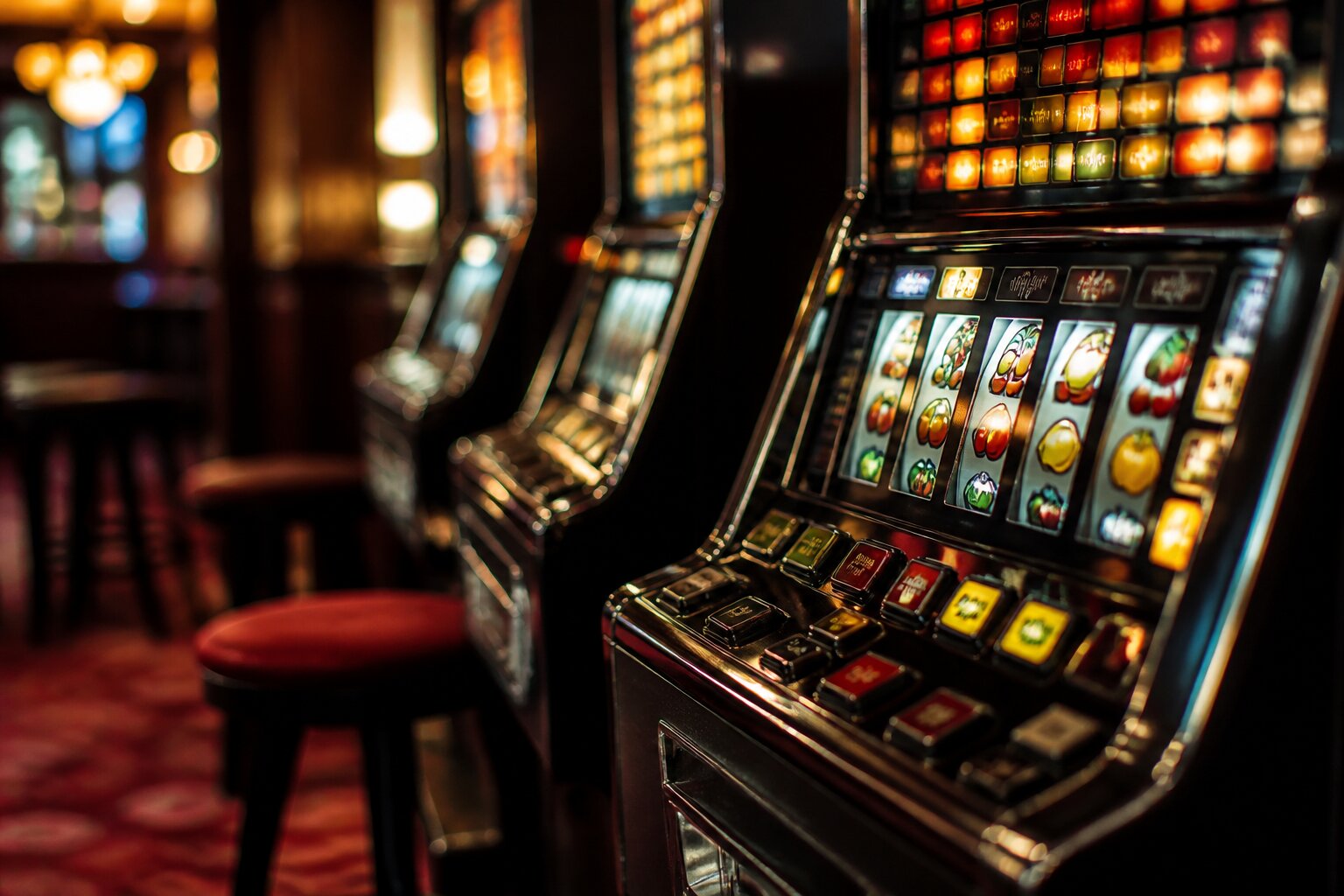
Ever wondered why the classic fruit machine has such a quirky nickname? You’re not alone. Across the UK, people give the same game different names, and the story behind “puggie” is part linguistic mystery, part social history.
This piece traces how slot machines arrived in Britain, where the term “puggy” came from, and how these machines evolved into the games many recognise today. Along the way, you’ll get clear explanations, useful examples and a sense of why these machines remain familiar fixtures in British leisure culture.
Ready to uncover how a simple arcade device picked up so many identities? Let’s begin with what “puggie” actually means and where the word likely came from.
What Does "Puggie" Mean and Where Did the Term Come From?
“Puggie” is Scottish slang for a fruit machine, especially in cities such as Glasgow and Edinburgh. It refers to the same coin-operated games you might call fruit machines, slots or one-armed bandits elsewhere in Britain.
Linguists trace the word back to the Scots term “puggy,” which turns up in early 20th-century usage to mean a coin-taking device. One plausible route for the word’s arrival is contact with South Asian languages: a term related to “paisa,” meaning money, may have been absorbed by servicemen and traders and then adapted into local speech. Over decades, the pronunciation and spelling shifted and settled into the familiar regional form.
The local name captures more than etymology; it also reflects how these machines were folded into everyday life in Scottish pubs and social clubs. Understanding the word helps explain regional language habits and sets the scene for how the machines themselves spread across the UK. Next, we’ll look at how those machines first arrived on British soil.
The Early History of Fruit Machines in the UK
Fruit machines reached Britain in the early 1900s, influenced by American slot designs. The first examples were purely mechanical: reels driven by gears and a lever, with small prizes such as coins, sweets or tokens. They turned up in pubs, fairgrounds and amusement arcades where people gathered to socialise.
By the mid-20th century the devices were widespread. The fruit symbols that gave the machines their common name became standard imagery during this period, helping the games stand out and be easy to recognise. Legal changes in the 1960s also shaped the market, allowing more machines in public venues and encouraging manufacturers to innovate with features and payouts.
Technical improvements followed a familiar pattern: mechanical to electromechanical, then to fully electronic models. Alongside engineering advances, regulation began to take shape to protect players and ensure machines operated transparently. That regulatory framework continued to evolve as the technology did, which is important for understanding how the machines are overseen today. The next section explores the origin of their fruit symbols in more detail.
How Did Slot Machines Get Their Distinctive Fruit Symbols?
The fruit motifs that define these machines have a practical beginning. Early manufacturers in the United States used pictures of cherries, lemons and plums to indicate fruit-flavoured chewing gum prizes rather than cash. Using images of fruit let machines offer something of value while remaining within the limits of anti-gambling laws at the time.
As legal restrictions relaxed and the products on offer shifted back towards cash payouts, the fruit icons remained. They were recognisable, colourful and compact, so manufacturers continued to use them even when the original need for gum-based prizes no longer existed. That continuity explains why “fruit machine” stuck as a term in Britain and why similar imagery is still used even on modern digital titles.
Those symbols also influence how people talk about the games, breeding nicknames that reflect local speech and venues. Having seen how the fruit motifs endured, it’s worth turning to why different regions developed their own names for the same device.
Why Do Different Names for Slot Machines Exist Across the UK?
Local names for slot machines reflect regional dialects, social spaces and how the games were encountered in daily life. In Scotland, “puggie” is common; in England and Wales you might hear “fruit machine” or “fruity”; elsewhere the words “bandit” or “slot” are more usual. These variations show how language adapts to local habits and settings.
The kinds of venues where machines were placed helped shape their nicknames. Pub culture, seaside arcades and working men’s clubs each had their own rhythms and regulars, and the informal terms that grew up around the games often stuck. Those names also travelled with migrants and visitors, which is one reason regional terms can appear in unexpected places.
Knowing the regional vocabulary gives context for the machines’ social role and helps explain why their evolution produced both shared features and local differences. With naming and imagery explained, the next section looks at how the machines themselves developed over time.
Evolution of Fruit Machines Over the Decades
The technical journey of fruit machines mirrors broader shifts in electronics and computing. What started as a mechanical novelty developed into electromechanical apparatus with added lights and sounds, and later into fully electronic machines with microprocessors controlling outcomes and features.
The arrival of random number generators changed gameplay fundamentally by ensuring that each spin’s outcome is independent and reproducible only by reference to the machine’s internal algorithm. That technical detail underpins modern fairness standards and explains why myths about predictable behaviour often persist despite being unfounded.
Digitalisation also expanded what machines could offer: animated displays, themed bonus rounds and complex pay structures became possible, and eventually online versions allowed the same designs to be played through web and app platforms. These changes brought new regulatory considerations as well, which led to tighter rules on transparency, age checks and player protections. The following section addresses some of the common misunderstandings these technical changes have created.
Myths and Misconceptions About Puggies and Slot Machines
Several persistent myths surround these games. One is the idea that a machine can be “due” to pay out because it has not recently, or that some physical action by the player can influence the result. Modern machines operate so that each play is determined independently, which means past outcomes do not alter future ones.
Another misconception is that timing or “stopping the reels” changes the result. With contemporary electronics, the outcome is effectively fixed at the moment play is initiated; surface interactions after that do not affect the predetermined result. These technical facts explain why schemes or rituals promoted as surefire ways to beat the machine are misguided.
Understanding the mechanics helps people make informed choices about play. Clear information on how outcomes are generated and what controls are available contributes to a safer environment for anyone choosing to use these machines. That technical and regulatory context also shapes how popular these games remain today.
Modern-Day Impact: Are Puggies Still Popular in the UK?
Fruit machines continue to be familiar across Britain, though the pattern of how people engage with them has shifted. Physical machines remain present in pubs and arcades, but their numbers have fallen somewhat while online play has grown. Digital platforms now host large libraries of titles that borrow the fruit imagery and straightforward mechanics of traditional machines while adding modern features.
Regulation and consumer protections have kept pace with these changes. Operators are required to verify age and to offer tools that help users manage spending and access support if needed. Those measures aim to make participation safe and transparent for adults who choose to play.
Puggies and fruit machines still occupy a place in British leisure, combining a long visual tradition with contemporary technology and oversight. Whether encountered in a local pub or on a screen, they remain a recognisable part of the gaming landscape.
We hope this run-through makes the name “puggie” and the machines it describes clearer and more interesting next time you see one in a pub or online.
**The information provided in this blog is intended for educational purposes and should not be construed as betting advice or a guarantee of success. Always gamble responsibly.