
Understanding how dealers identify a blackjack is a key part of learning the game. While the dealer’s quick check can look simple, there are clear procedures behind it.
This blog post answers the main questions around dealer blackjack, including the rules they follow, how insurance works, and what changes on multi-deck or electronic tables. It also explains how mistakes are handled and how player outcomes are settled when the dealer shows a natural 21.
Knowing these points helps the whole round make more sense from the first deal to the final payout. If you choose to play, set sensible limits and keep it within your means.
How Does The Dealer Check For Blackjack?
At the start of a blackjack round, each player and the dealer receive two cards. In most UK casinos, the dealer has one card face up and one face down, known as the hole card.
The dealer only checks for blackjack immediately if their visible card is an Ace or a 10-value card (10, Jack, Queen or King). If it is anything else, no check is made at that moment. When a check is needed, the dealer discreetly looks at the hole card, often using a small mirror or peek device built into the table.
If the two cards form 21 with an Ace plus a 10-value card, the dealer has blackjack and will reveal it. If not, the round carries on as normal and players take their turns.
With that in mind, what exactly qualifies as a dealer blackjack and what does not?
What Counts As Blackjack For The Dealer?
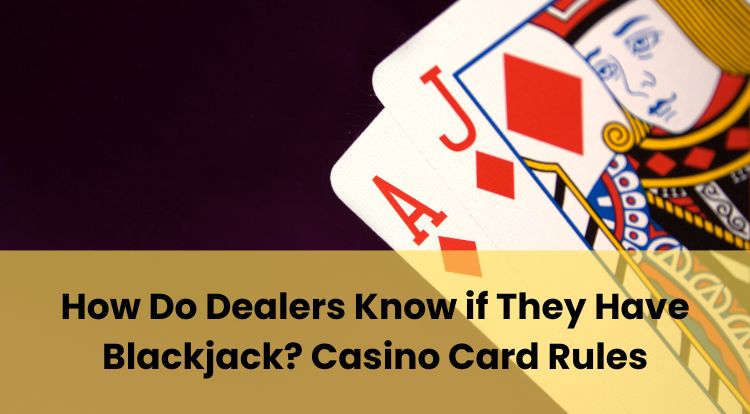
For the dealer, blackjack is a specific two-card hand: an Ace with any 10-value card. It must be formed by the first two cards dealt to the dealer to qualify as a natural. Suits do not matter.
A total of 21 made with three or more cards is not blackjack. It is simply a 21, which can still win against many totals but does not qualify as a natural and is settled differently if compared with a player’s blackjack.
This difference matters because a dealer’s natural ends the round at once, which affects how the table resolves all bets. That leads to the next rule most tables use to speed things up.
Dealer Peek Rule And When It Is Applied
The dealer peek rule allows the dealer to confirm a natural right after the initial deal whenever the upcard is an Ace or a 10-value card. The dealer discreetly checks the hole card before players draw further cards or add extra wagers.
Peeking protects players from committing to doubles and splits only to discover moments later that the dealer already had a natural. Not all tables use this rule. In some versions, often called no-hole-card or European rules, the dealer does not take or check a hole card until after players act. In those games, outcomes for extra wagers can be different if the dealer later reveals blackjack, so it is worth noting the table rules before you start.
If a peek confirms blackjack, the dealer reveals it and the hand is settled immediately. If not, the round proceeds in the usual order, starting with the player to the dealer’s left.
This early check also sets up the offer that appears whenever the dealer shows an Ace.
How Does The Insurance Offer Work When Dealer Shows An Ace?
When the dealer’s upcard is an Ace, players are usually offered insurance. This is an optional side bet, typically for half the original stake, that pays 2 to 1 if the dealer’s hole card is a 10-value card, creating blackjack. If the dealer does not have blackjack, the insurance bet is lost and the main hand continues as normal.
Insurance is settled independently of the main wager. For example, with a 10 wager, an insurance bet of 5 would return 10 profit if the dealer shows a natural, while the main bet would typically lose or push depending on the player’s hand. Some tables also offer even money to players who already have blackjack when the dealer shows an Ace, which is simply a convenient way of taking insurance on that hand.
Once insurance is sorted and any peek is resolved, the focus turns to how the table pays or collects.
Dealer Blackjack Payouts And Player Settlements
If the dealer has blackjack, the hand ends as soon as it is revealed. All player hands without blackjack lose their original bets. A player blackjack against a dealer blackjack is a push, so the stake is returned. If a player placed insurance, that side bet pays 2 to 1 when the dealer’s natural is confirmed.
How doubles and splits are treated depends on the rules in use. With peek games, players have not yet placed those extra wagers when a dealer natural is found, so only the original stakes are affected. In no-hole-card games where the dealer checks later, some rules collect all active wagers if the dealer shows a natural, while others only take the original stake. The table signage or rules page will state which version applies.
With the basics in place, you might wonder if the number of decks changes any of this.
How Do Multiple Decks Or A Shoe Affect Dealer Blackjack Checks?
Many tables use multiple decks loaded into a shoe to help deals run smoothly. This setup does not change how the dealer checks for blackjack. The decision to peek, the definition of a natural, and how hands are settled all follow the same procedure whether one deck or eight decks are in play.
Using several decks can make it harder for players to judge which ranks remain, but the dealer’s verification of a natural is unchanged. You may also see a cut card and a burn card used between shuffles, both standard practices that do not affect the blackjack check itself.
From physical shoes, some casinos move to digital setups that follow the same rules but automate parts of the process.
Electronic Tables And Automatic Verification Of Naturals
On electronic blackjack tables, cards are dealt virtually and the system automatically identifies a natural as soon as the first two cards are dealt. If the dealer’s cards are an Ace and a 10-value card, the table flags blackjack at once and settles bets according to the stated house rules.
These tables mirror the same procedures used on felt, just with instant checks and faster pacing. The key ideas remain the same: a two-card 21 for the dealer ends the round immediately, and pushes, losses and insurance are handled as described by the game’s rules page.
Even with tech in the mix, there are clear protocols for the rare times something goes wrong.
What Happens If A Card Is Exposed Or A Misdeal Occurs?
A card is considered exposed if it is unintentionally shown when it should have remained face down. When this happens, the dealer follows house procedures to keep the round fair. Depending on the situation, the exposed card may remain in play, be treated as the next card due, or be replaced from the shoe. The goal is always to apply a consistent fix without giving any player an advantage.
A misdeal is a more significant error, such as cards being dealt to the wrong position or the wrong number of cards being given. When a misdeal is declared, the hand is usually voided, all stakes are returned, and a new round begins. If you are unsure what is happening, it is fine to ask the dealer to confirm the procedure being used.
With errors accounted for, it is useful to finish with how ties work when the dealer shows a natural.
How Are Pushes And Ties Resolved When The Dealer Has Blackjack?
A push occurs when both the dealer and a player have blackjack from their first two cards. In that case, the player’s stake is returned and no one wins that hand. Each player position is treated separately, so one seat can push while another loses.
Side bets and insurance are resolved under their own rules. Insurance, where taken, still pays 2 to 1 when the dealer shows a natural. Other side wagers follow their posted pay tables and may not be affected by the push on the main hand.
Understanding how dealer naturals are checked and settled makes every round easier to follow, from the first peek to the final payout. If you decide to take a seat, keep to limits that suit you, and if gambling begins to feel difficult, organisations such as GamCare and GambleAware offer free, confidential support.
**The information provided in this blog is intended for educational purposes and should not be construed as betting advice or a guarantee of success. Always gamble responsibly.