
Poker can seem a bit puzzling at first, especially with all the different terms and phrases tossed around at the table. Ever heard someone mention “the next street” and wondered what on earth they meant? You’re not alone.
Whether you’re curious about how poker hands work or just want to brush up on poker lingo, knowing the right terms makes the game more enjoyable and easier to follow.
In this post, we’ll explain exactly what a “street” means in poker, cover the basic terms you’ll hear in every game, and show how hands and betting rounds develop so you can feel more confident at the table.
What Does “Street” Mean in Poker?
In poker, the word “street” means a stage in the hand when cards are dealt or when a round of betting happens. It’s a way to mark progress through a single hand, so players know when to act and what information is available.
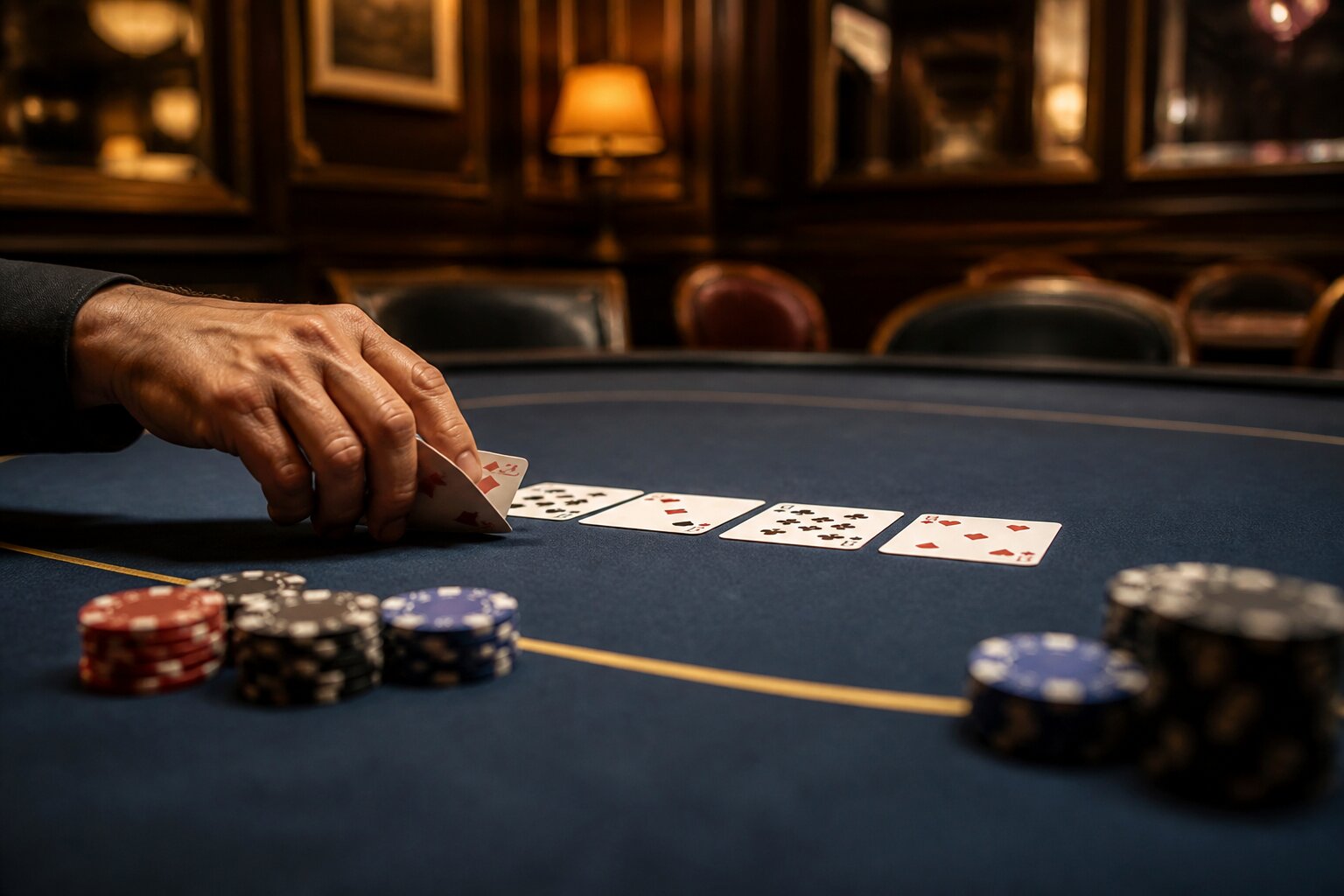
In Texas Hold’em, the community-card stages are commonly called the flop, the turn, and the river. The flop is three community cards dealt together, the turn is the fourth card, and the river is the fifth and final community card. Each of those moments is referred to as a street because they bring a new set of options and new information to everyone at the table.
Saying “action is on the next street” simply signals that play will continue after the next card is revealed. That short phrase helps players follow the order of play and understand when their decisions will matter most.
Why Are Streets Important in Poker?
Streets give structure to a hand. By dividing play into stages, the game becomes a series of decision points where the available information changes and players react accordingly. That structure makes it easier to judge how a hand is developing and to anticipate other players’ choices.
Each street alters the composition of the board and can shift the strength of different hands. Early streets often involve more uncertainty; later streets tend to clarify which hands are realistic. Players use the information from previous streets to form expectations about what opponents might hold and to size bets in response.
Understanding the role of streets helps you follow the rhythm of the game. It also makes it simpler to see why certain plays are made at specific moments rather than at random.
Common Poker Terms Explained
If you’re new to poker, the phrases you hear at the table can feel like a different language. Here are several common terms explained clearly so you can recognise them when you hear them.
Blinds: Forced bets that create an initial pot and encourage action. The small blind is placed by the player immediately left of the dealer; the big blind is usually twice that amount.
Flop, Turn, River: The community cards dealt in the middle of the table. The flop is three cards dealt together, the turn is the fourth card, and the river is the fifth card.
Check: To remain in the hand without betting when no bet is currently on the table.
Call: To match another player’s bet in order to continue in the hand.
Fold: To give up your hand and forfeit any chance of winning the pot.
Raise: To increase the current bet, forcing other players to match the higher amount if they want to stay in.
These terms apply across most poker variants played with shared cards. If you plan to play for real money in the UK, you must be 18 or older.
Understanding Poker Hands
Knowing how hands rank is central to making sensible choices as each street unfolds. Hands are ranked by how likely they are to beat other combinations when all five cards are considered.
At the top is a Royal Flush, which comprises ace, king, queen, jack and ten all in the same suit. A Straight Flush follows, which is five consecutive cards of the same suit. Four of a Kind means four cards of identical rank. A Full House combines three of a kind with a pair. A Flush is any five cards of the same suit, and a Straight is five consecutive cards that are not all the same suit.
Lower-ranked hands include Three of a Kind, Two Pair and One Pair. If none of those combinations are present, the highest single card determines the outcome—this is called High Card. As the streets are dealt, the relative strength of these hands can shift dramatically, which is why paying attention to the board is so important.
Betting Rounds: How Do Streets Affect Betting?
Betting rounds correspond to streets, and each round gives players a chance to respond to the evolving board. Early rounds might be used to probe opponents or to build the pot when a player believes they hold a strong hand. Later rounds often see more precise bets because the available hands are clearer.
Players’ choices during each betting round influence position, perceived strength and the amount of money committed to the pot. For instance, a substantial bet on the turn can change how opponents view the river and whether they continue. Conversely, a small bet can keep weaker hands in play, affecting pot size and the decisions on later streets.
So the sequence of streets and betting rounds provides a narrative for the hand: each stage adds detail that helps players decide whether to invest more, protect a lead, or step back.
The Impact of Streets on Poker Strategy
As cards are revealed across the streets, players adapt. Some will narrow the range of hands they consider possible for an opponent; others will change bet sizing to either discourage calls or to extract more value from hands that are likely to fold. Position at the table also interacts with the streets—acting after others gives you more information to work with, and acting before them requires anticipating possible responses.
Good strategic thinking balances the information each street provides with what opponents’ previous actions suggest. Over time, learning how different streets typically resolve against certain lines of play will sharpen judgement about which moves are likely to be productive.
Street Myths: Is Luck Everything?
This heading raises a common question about whether the way cards fall on each street decides everything. The reality is that outcomes depend on both the cards dealt and the decisions players make. Cards define what is possible, while choices determine how the pot is contested.
A belief that perfect play guarantees victory misunderstands the game. Even experienced players will sometimes lose hands after making thoughtful decisions; conversely, inexperienced plays can occasionally win. What separates better players is not certainty of outcome but a consistent ability to make decisions that are expected to be profitable over many hands.
Skill and Decision-Making
Skill shows up in how players interpret betting patterns, how they estimate which hands are plausible for opponents, and how they size bets to achieve a particular effect. Those abilities come from experience, observation and applying principles such as pot odds and position. Over time, these elements combine to improve long-term performance.
Enjoying Poker for What It Is
Approaching poker as an intellectual and social game helps keep it enjoyable. That means setting clear limits for time and money, and stepping away if play stops being pleasurable. Keeping the activity controlled and deliberate ensures it remains a positive experience.
If you’d like to explore games or tables, check the options we offer and pick what fits your style and limits. Play within your means and make choices that keep the game fun for you.
**The information provided in this blog is intended for educational purposes and should not be construed as betting advice or a guarantee of success. Always gamble responsibly.