
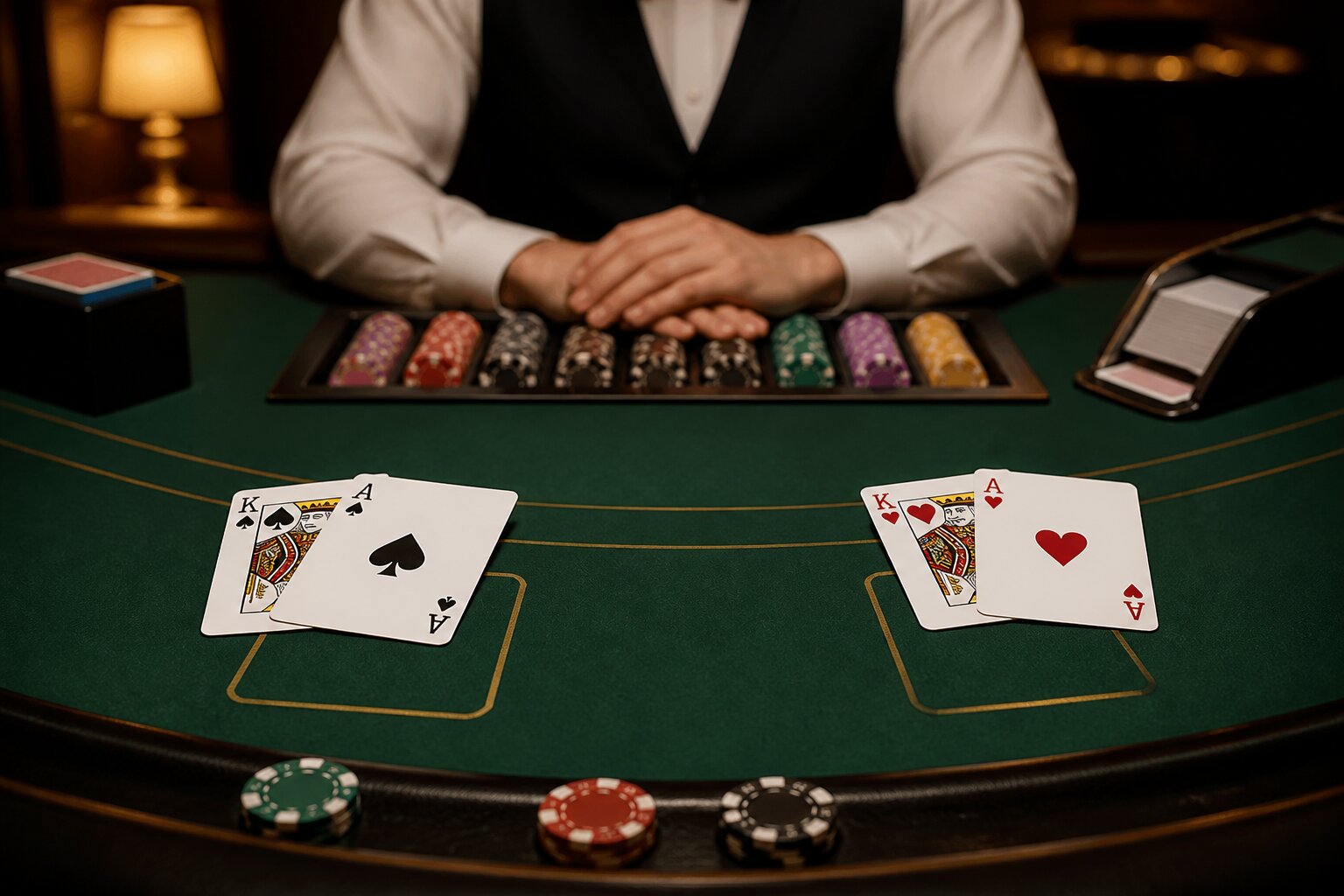
Blackjack is centred on beating the dealer, but what if you both get the best possible start? It’s a scenario every player may encounter, and knowing how it’s resolved keeps the game straightforward.
This article explains the exact rules, clarifies common misunderstandings and points out the small variations you might meet at different tables. Read on so there are no surprises when that 21 appears on both sides.
Let’s look at what counts as a blackjack and what follows when the player and dealer both have one.
What Is a Blackjack in Casino Terms?
A blackjack is a very specific two-card hand: an Ace plus any 10-value card (10, Jack, Queen or King) dealt as the first two cards. That immediate 21 is often called a natural and is treated differently from a total of 21 made with three or more cards, which is simply described as a total of 21 rather than a blackjack.
This distinction matters because certain rules and payouts apply only to that two-card blackjack. For example, a natural blackjack commonly receives a higher payout than a regular winning hand, and it usually takes precedence over other hands that add up to 21 over multiple cards.
If both player and dealer have a blackjack, the result is normally a push and the player gets their stake back rather than winning. If only the player has a blackjack, the player typically wins unless specific house rules state otherwise.
Different casinos and game variants may treat payouts and rules for blackjack differently, so it helps to check the table rules before you play. Understanding exactly what constitutes a blackjack prevents confusion about whether a hand qualifies for any special payout or treatment at the table.
How Are Ties Handled in Blackjack?
When the player and the dealer finish with the same hand value, the result is called a push. In that case, neither side wins and the player’s original stake is returned.
This rule applies regardless of the specific total that produces the tie, including when both hands are blackjack. Pushes are a standard and explicit outcome in the rules used at most tables and online games.
If you want to be thorough, take a moment when you sit down to check the table’s rule sheet for any minor variations, but the basic push outcome is what you should expect.
What Does a Push Mean in Blackjack?
A push simply means the round ends in a tie, with no change to the player’s balance beyond getting the original bet back. There is no additional payout and no loss recorded for that hand.
A push happens when the player and the dealer finish with the same hand value, including when both have blackjack, unless a house rule specifies otherwise. The result is neutral: your stake is returned and neither side wins that particular outcome.
After a push, the game continues to the next round under the usual dealing and betting procedures. Any side bets or insurance bets are resolved according to their own rules and may not be affected by the main-hand push.
Treat a push as neither a win nor a loss and carry on playing within your limits.
Player and Dealer Both Have Blackjack: Who Wins?
If both player and dealer are dealt a two-card blackjack, the hand is a push. That means neither side wins that round, the player does not receive a payout, and the original bet is returned. Play for that hand ends and the player may place a new bet for the next round.
Although a player blackjack normally carries a special payout, that bonus does not apply when the dealer also has blackjack. The matching two-card 21s negate the higher payout and the result is treated as a tie.
Note that side bets such as insurance are separate from the main wager. If a player took insurance and the dealer has blackjack, the insurance bet pays out even though the main hand is a push.
Does the Payout Differ If Both Have Blackjack?
There is no payout when both the player and the dealer have blackjack. In that situation the stake is returned and the special blackjack payout is not applied. This outcome follows the push rule described earlier, resulting in a tie rather than a win for either side.
Some game variants can introduce side bets or optional rules that pay out in different ways, so it is sensible to confirm the specific game terms before you play. Check the rules table or the paytable for details, especially if you are playing an unfamiliar version. Examples to watch for include:
- side bets that resolve independently of the main hand
- promotional rules that alter payouts for certain hands
- local or online house rules that may change tie outcomes
For standard play, however, a matching blackjack on both sides ends as a tie and the player simply gets their stake back.
Blackjack House Rules You Should Know
Casinos and online operators publish the house rules for each blackjack variant, and those rules can affect details such as whether the dealer checks for blackjack immediately, whether the dealer hits or stands on soft 17, and how side bets are treated.
These differences rarely change the basic push outcome for equal totals, but they can influence other hands and payouts. Take a moment to read the rules displayed at the table or on the game page so you understand how that particular game proceeds.
If you’re unsure about a rule you encounter, ask the dealer or consult the help information in the game interface before you join play.
Common Variations on Blackjack Ties
Most variants treat a tie as a push, but some side-bet formats and novelty games include alternative outcomes tied to specific conditions. For example, a particular side bet might pay if both player and dealer have blackjacks of certain suits or ranks, though these are separate from the regular hand outcome.
When playing those variants, separate your decisions about the main hand from any optional side bets so you clearly understand what each wager covers and how ties affect them.
Are There Myths About Tied Blackjacks?
Several misconceptions circulate among players about tied blackjacks. These misunderstandings can cause confusion at the table and lead to misplaced expectations.
Common errors include:
- Expecting a player to receive the usual blackjack payout when the dealer also has blackjack. If both have blackjack the hand is a tie and the stake is normally returned, not paid as a win.
- Believing the dealer gains an extra advantage in tie situations. In reality, tie rules apply equally to both sides and do not give the dealer a special benefit.
- Thinking past ties affect future rounds. Each deal is resolved independently and prior outcomes do not influence subsequent hands.
Knowing the correct rules helps keep play calm and expectations accurate. It is also sensible to check the specific house rules where you are playing, as small variations can exist between casinos. If you are unsure, ask the dealer for clarification before a hand is settled.
Key Takeaways on Player vs Dealer Ties
Here are the essential points to remember about ties in blackjack:
- A blackjack is specifically an Ace plus a 10-value card dealt as the first two cards.
- When player and dealer have the same total at the end of a round, the result is a push and the player’s stake is returned.
- If both the player and dealer have blackjack, the outcome is a push and no special blackjack payout is applied.
- House rules can differ in minor ways, so check the specific game terms before playing.
If you ever feel uncertain while playing, pause and review the rules for the table you’re at or the game you’re using. That way you avoid surprises and keep play straightforward and fair.
**The information provided in this blog is intended for educational purposes and should not be construed as betting advice or a guarantee of success. Always gamble responsibly.